

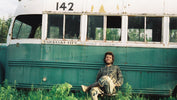
We’re Still Arguing About Chris McCandless 30 Years Later
I remember stumbling upon a creased, dog-eared copy of Jon Krakauer’s Into The Wild at my local used bookstore once when I was 14. At that age, I was a bookish, outdoor-phobic theater kid. I didn’t feel called to cast off the trappings of polite society and chase freedom in America’s “Last Frontier.” Still, the premise of the book intrigued me and within a few chapters, my skepticism dissolved into wonder as I followed Christopher McCandless on his perfectly unordinary walk on the wild side.
I was captivated by the portrait of a young man so disenchanted by the mirage of the American Dream that he traded a promising future for a life stripped to the barest of essentials in pursuit of something real. I envied the chutzpah. To my under-developed psyche, McCandless was a tragic hero, a modern day Thoreau, the anti-Odysseus.
This year marks 30 years since the release of the book that launched a thousand redundant op-eds on whether we should pity, condemn, or emulate McCandless’ manifesto. Here’s one more.
Now a certified “grown-up,” I’m not prepared to fully overturn my teenage verdict, but something has changed. Possibly me. To a young person, adulthood is this hulking goliath of expectations cast down by people who don’t quite understand you. McCandless’ decision to give away his savings, abandon his car, and rebrand himself as Alexander Supertramp offered a neatly packaged answer to a question many young people wrestle with at some point or another: What if I just refused to comply?
So, when I picked up the same battered copy years later, now with a career, bills, family, and a few funerals behind me, the story hit differently. This time, I became snagged on the seemingly pedestrian details that teenage me skimmed past. McCandless’ thirst for adventure, which far outweighed his time in the wilderness, now read less like humble conviction and more like the surety of someone who had never really been wrong.
Part of why I believe Into the Wild keeps dividing me and so many other readers is that it acts as a Rorschach test. McCandless never got to tell the story in his own words. We have only postcards, journal entries, underlined passages in Tolstoy and Thoreau, and the hazy recollections of people who knew him for a week or a season. Everyone is handed the same few facts, but what each person interprets between the lines says more about the reader than about McCandless himself.
As a rebellious teenager, I saw a manifesto, proof that with enough courage a person could toss the script and walk off the page. It made sense. Now, though, I see a wounded young man who was headstrong, hopeful, and a lot like me. He was neither a prophet nor a fool, but a restless, idealistic 20-something who mistook distance for deliverance, and who might have lived to appreciate the difference.
After this go around, I find myself pondering a new question: Can a life lived in pursuit of authenticity be judged by how it ends, or only by how it was lived? Maybe when I get the wild hair to read the book again in another 10 years, I’ll have the answers.
—Ash Czarnota